languages languagesicone
site loader
site loader
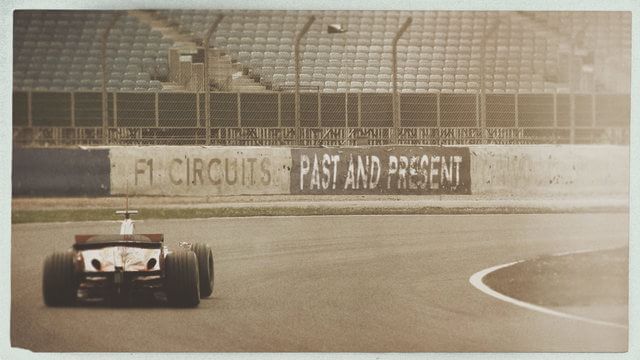
February 21, 2015 F1 Circuits Past and Present – Series 2 omnibus

F1 Circuits Past and Present – Series 2 omnibus

Hello friends, and welcome to the omnibus edition of the second series of F1 Circuits Past and Present, a show that takes a closer look at some of the highlights of the Formula One calendar throughout the sport’s history. These seven short shows were originally released one-a-day for a week, but have now been gathered together for a longer listen. Enjoy!

Here are the links to the individual show notes:

There’s a vast array of potential circuits for future podcasts, but if you think any of them deserve particular attention, do let me know. Suggestions and feedback are always welcome, and that only leaves me to say thanks for listening!

See more on F1 Circuits Past and Present – Series 2 omnibus


Copyright sidepodcast.com

February 14, 2015 F1 Circuits Past and Present – Interlagos

F1 Circuits Past and Present – Interlagos

Welcome to F1 Circuits Past and Present, the Sidepodcast mini series that takes a closer look at tracks that have hosted the pinnacle of motorsport across the years. This is the final episode, and so to finish we’re narrowing our gaze at an absolutely classic track, one that really lifts the spirits and makes each race it hosts an event to behold.

The Brazilian Grand Prix is held at the Autódromo José Carlos Pace better known as Interlagos – its original name. The circuit was built on land that had originally been earmarked for housing, but after purchase, the developers realised it wasn’t all suitable to accommodation. Instead, in the late 1930s, a race track was born instead. The surrounding land was soon built up with housing, putting the circuit smack in the middle of the bustling city of São Paulo.

The circuit hosted races of all shapes and sizes, but Formula One took its time to arrive. The first Brazilian GP was held in 1972, on the back of – as is so often the case – a successful driver. Emerson Fittipaldi was seeing good results in the sport, and the Brazilian fans wanted to cheer him on in a home race.

The first race, a non-championship event, was won by Carlos Reutemann, but the following three official championship races were won by Brazilians. Fittipaldi took victory in 1973 and 1974, with Carlos Pace scooping the win the following year. Fittipaldi finished second, making it an all-Brazil front row, much to the home crowd’s delight. That was, however, the only race Pace would win, and the Brazilian driver was sadly killed in a plane crash two years later. The track was renamed to honour his memory.

It wasn’t just the name of the track that changed, either, the layout was redesigned. The bumpy surface and longer layout threw up plenty of safety question marks, particularly with the ground effects aerodynamic design that was so dangerous. In the end, F1 left Interlagos and moved to another Brazilian circuit instead. The Rio de Janiero track had better facilities and hosted the event in 1978, and then again between 1981 and 1989. Part of the move could also be attributed to Brazilian racer Nelson Piquet, who was seeing his own success in the sport. That track was eventually renamed after him, but not before his results tailed off and F1 started casting about for a new venue once more.

Meanwhile, Interlagos underwent a huge, intensive redevelopment programme, shortening the track, sharpening up the facilities and improving the safety measures. In 1990, F1 made a triumphant return to Interlagos, where it has been ever since. The track presents a great challenge for drivers, an anti-clockwise, fast-flowing layout with elevation changes aplenty. It was also known for the bumpy surface, although a huge resurfacing project ahead of the 2007 GP attempted to smooth things out.

Initially at the start of the season, the Brazilian GP moved to be nearer the end, occasionally the final round on the calendar. As a race near the end of any title battle, Interlagos has hosted plenty of championship showdowns – including the classic head to head between Lewis Hamilton and Felipe Massa in 2008. The changeable conditions, fantastic layout, and hugely passionate fan-base give the race weekend a brilliant atmosphere that is perfect for a season finale. F1 may have put Abu Dhabi at the end of the schedule recently, but the rightful home does sit with Interlagos.

That’s all for this episode and this second series of F1 Circuits Past and Present. If you’re looking for something else to listen to, you can find out more about Emerson Fittipaldi and his brethren in the second episode of Racing Families, another mini series on Sidepodcast. Thank you for listening, and do share your thoughts about any of the tracks covered over the past seven days, or any you think deserve a look in future episodes. Send your feedback to Christine@sidepodcast.com or via the contact form sidepodcast.com/contact.

See more on F1 Circuits Past and Present – Interlagos


Copyright sidepodcast.com

February 13, 2015 F1 Circuits Past and Present – Mexico

F1 Circuits Past and Present – Mexico

Hello and welcome to the sixth episode of F1 Circuits Past and Present, a second series of the miniseries brought to you by Sidepodcast. We’ve covered old and new, with a focus on the old, but now it’s time to look at the returning. Formula One’s calendar for 2015 features a race that was previously on the calendar, and is making a comeback.

The Mexican Grand Prix arrived on the calendar as a result of a top flight Mexican driver, Ricardo Rodriguez, who was making his name in Formula One. The local government sat up and took notice, deciding they should host a home Grand Prix for their famous driver. They built a track in the parklands of Magdalena Mixhuca Sports City, and were ready for the 1962 season.

It was a non-championship event, and Ricardo’s team, Ferrari, decided not to attend. He wasn’t going to miss out on his home race, however, and so rented a Lotus so he could participate. Tragically, Ricardo was killed during qualifying for the race, but the Mexicans persevered. They renamed the track after their fallen hero, and started to support his brother, Pedro Rodriguez, who was also racing in sports cars. He made the switch to Formula One, winning two races in his career. He passed away almost ten years later, after a crash during a sports car race.

Meanwhile, the Mexican track was busy hosting Formula One races. After the first non-championship event, the second race in 1963 was an official part of the schedule, and it continued to be so until 1970.

The track is notable for being more than 2000 metres above sea level, which means the air is thinner and the drivers and engines perform differently than at other events. It’s also a very bumpy track that often needs to be resurfaced. The road course is a clockwise track, but there’s also an anti-clockwise oval that takes in the final corner and banking at high speeds. Various NASCAR series use the oval, although they have had several serious accidents due to some of the corners being blind on entry.

The initial reason for the disappearance of the race from F1 schedules was an unsafe infrastructure, particularly in regards to overcrowding by the fans. The FIA did not want Formula One to return to the circuit for the 1970 season, when organisers couldn’t guarantee they could stop the crowd invading the track.

During its time off, the circuit was redeveloped with a new pit and paddock complex, and returned for the 1986 season. The second stint of Mexican Grand Prix events was noted for the increasingly bumpy surface, which caused several high profile accidents and injuries. The 1987 race had to be stopped after an accident for current race steward Derek Warwick, in his Arrows car. The race’s brief return came to an end in 1992, with Nigel Mansell winning the final event held in Mexico.

A baseball stadium was built on the inside of the final corner of the track, which was the scene of festivals and concerts in the intervening period. Although other racing categories used the track, and they had to navigate the stadium by going through it, or detouring around it.

In 2012, the Mexican Grand Prix was included on provisional F1 calendars, but its second comeback had to be postponed at least twice before it hit the official calendars. Now the race, and the circuit, will feature towards the end of the 2015 F1 season, more than twenty years since it was last attended. The Force India team, despite the country included in their name, have taken the returning race to heart, celebrating a home race for their driver Sergio Pérez. They unveiled their new-look 2015 car in Mexico City, allowing visiting media a chance to pop over to the track and see the redevelopment of the circuit ahead of the race.

That’s all for this episode of F1 Circuits Past and Present. I’d love to hear your thoughts ahead of Mexico’s return to the Formula One calendar this year, get in touch via the contact form: sidepodcast.com/contact. I briefly mentioned the Arrows team in this show, you can find out more about them in the first series of Forgotten F1 Teams, also available on Sidepodcast. See you tomorrow for the final episode and our last circuit.

See more on F1 Circuits Past and Present – Mexico


Copyright sidepodcast.com

F1 Circuits Past and Present – Ceasars Palace

You’re listening to the Sidepodcast mini series F1 Circuits Past and Present, a second series that looks closely at tracks that have hosted the sport across the years. This is the fifth episode, and time to look at a classic track that has made an impressive name for itself despite featuring on the calendar on only two occasions.

For a track that held only two Formula One Grand Prix events, the Ceasars Palace circuit has earned itself quite the reputation. The race had previously been held at Watkins Glen, but after mounting concerns regarding safety issues, crowd control and unpaid debts, the track was dropped from the calendar. The US still had a strong presence in the sport, with the United States West event scheduled to start the 1981 season at Long Beach.

F1 bosses wanted more, though, and looked around for another potential candidate for hosting a race. They opted for the rather bizarre setting of the car park of the Ceasars Palace hotel in Las Vegas. It seemed like an odd choice, but the idea was to improve the public perception of the city, and of course shine a spotlight on a potential tourist destination.

Bookmarking the 1981 season, the Ceasars Palace Grand Prix finished off the year in the hot and dry desert conditions. Although a race in a car park might sound less than professional, the track was well put together, it just still wasn’t popular with drivers.

One of the few anti-clockwise circuits, drivers found it tough going due to the strain on their necks as well as the difficult heat conditions. The main problem with the race wasn’t the setup, it was the lack of interest from fans. Even with the 1981 championship conclusion taking place, they couldn’t get the visitor numbers high enough to justify the event.

That first race had three potential champions vying for the title, but none of them won the event. Alan Jones, driving for Williams, snatched pole position, stormed into the lead and won the race by twenty seconds. The championship went to Nelson Piquet, who finished fifth. It was lucky that he didn’t need to climb the podium, as Piquet was suffering severe physical exhaustion and reportedly took a quarter of an hour to recover himself.

The 1982 season actually featured three US races, with the United States Grand Prix West as the third round of the season, the Detroit Grand Prix halfway through, and our Ceasars Palace once again rounding out the year. It was set to decide the championship for the second season in a row, with Keke Rosberg going head to head with John Watson.

Alain Prost had pole position, but dropped to fourth by the end of the race. Michele Alboreto won in a Tyrrell, with Watson second, but Keke Rosberg’s sixth place was enough to secure himself the World Championship.

Formula One decided the US had enough of a presence in the sport to risk losing one event, and dropped the Ceasars Palace race after just two years. The track continued to be used for the CART series for another two years, but then dropped out of motorsport completely and was redeveloped, being covered over with buildings.

An attempt to bring a Las Vegas race back to the calendar was considered just before the turn of the millennium, but with the car park covered over, there was no space to build a track, and no one could quite agree where the best spot would be. Instead, attention turned to the Indianapolis Motor Speedway, which went on to host the US Grand Prix from 2000 onwards.

That’s all for this episode of F1 Circuits Past and Present. If you’re interested in learning more about Keke Rosberg, then do have a listen to the first episode of Racing Families, another mini series from Sidepodcast taking a look at motorsport family trees. Thank you for listening, as always, and check right back here tomorrow for our penultimate F1 Circuit.

F1 Circuits Past and Present - Ceasars Palace

See more on F1 Circuits Past and Present – Ceasars Palace


Copyright sidepodcast.com

F1 Circuits Past and Present – Monza

This is F1 Circuits Past and Present from Sidepodcast, a second series of the mini series that looks at race tracks you’ve known and loved across the history of Formula One. Today’s fourth episode zooms right back to the very first championship season of the sport, with a classic race track close to the hearts of many.

Of all the circuits on the current Formula One calendar, Monza may be the one that strikes the most emotion into visitor’s hearts. Monaco may have its iconic status, and Spa-Francorchamps might have ferocious corners, but Monza has the history and heritage to really bring out the best of the sport. Known as La Pista Magica, the surrounding woods, the nearby banking and the familiar track layout stir the emotions of anyone who attends.

The circuit has hosted every single Italian Grand Prix, except for the 1980 race which was held at Imola. The track has varied between the full circuit and the road course, but Monza has been the Italian home of F1 since the championship began in 1950.

Set in the parklands of Monza, the track was originally built in 1922, as an oval track with a slightly longer road course included, both combining to create a 10 kilometre challenge. In the 1950s, the track was redesigned with the loop becoming a top of the range high speed oval, with steep banking at the corners. The road section remained, with F1 racing along the full 10 kilometres on four occasions.

Naturally, concerns about the safety of reaching such high speeds, flat out, along the banking grew and a particular incident caused consternation. In 1961, Wolfgang von Trips collided with Jim Clark, and his car became airborne, heading into the barriers and towards the crowd. Trips was killed, along with fifteen fans. Afterwards, Formula One bosses opted not to use the full track but to remain on the twisting course instead, with further safety improvements made for the following season.

Although there have been driver deaths at various tracks across the sport’s history, they are more keenly felt at Monza. The banking was last used in the late 1960s and over the years, the banking fell into disrepair. Now it sits just metres away from the track, crumbling. In 2014, the surface of a stretch of the banking was improved with a fresh layer of concrete – causing debate over removing the nostalgia of visiting the original banking versus keeping the structure alive for future generations to admire.

With history just moments away from the modern track, it’s understandable that emotions can run high during a race weekend. The Italian fans, particularly supportive of their local Ferrari team, just add to the excitement with their own brand of fervour. Although the layout is no longer an oval, speeds are still high around a lap of Monza, with full throttle in use for most of the track, and just the occasional braking zone for a chicane to keep drivers in check.

Chicanes were introduced in the 1970s to attempt to slow the cars down, but it didn’t really work as well as hoped. The chicanes have been tweaked occasionally, but it still remains the fastest of the modern F1 tracks. Most of the subsequent improvements focused on improving safety instead, with better barriers and more run off area wherever possible.

Monza doesn’t only host Formula One racing, it’s also a crucial stop on the calendar for motorcycle racers, as well as endurance racing, and touring cars. For anyone that attempts to navigate their way around the track at top speeds, it’s all about bravado – keeping your foot down regardless of what might happen. That’s what makes the track special, the challenge it continues to present, regardless of what ghosts are hiding amongst the nearby trees.

That’s all for this episode, thank you for listening. Does Monza hold any special memories for you? Do let me know @sidepodcast or via the contact form at sidepodcast.com/contact. For more about Monaco and Spa, mentioned earlier in this episode, check out the first series of F1 Circuits Past and Present, which features those two and many more. Join me here again tomorrow for another circuit to add to the list!

F1 Circuits Past and Present - Monza

See more on F1 Circuits Past and Present – Monza


Copyright sidepodcast.com

F1 Circuits Past and Present – Jerez

Welcome to the third episode of the second series of F1 Circuits Past and Present, the latest mini series from Sidepodcast that takes a closer look at race tracks hosting Formula One across the years. We’ve looked at a current track and one that used to be a fixture, but now we’re focusing on a circuit that’s still in use, if not on the official calendar.

The Circuito de Jerez is one of several F1 capable racing tracks in Spain. It’s not on the official calendar anymore but has hosted both the Spanish Grand Prix, and the European Grand Prix as well. The Spanish race had previously been held at Jarama, but dropped off the calendar between 1982 and 1985.

Meanwhile, Pedro Pacheco, the mayor of Jerez de la Frontera, thought they had the ideal place for a new Grand Prix circuit, for both motorcycles and Formula One. The project was intended to provide a place for the Spanish Grand Prix, but also to promote the local area, famous for its sherries. The track was built and ready for the 1986 season, with bikes turning up first, and F1 following in April that year.

The first Grand Prix held at Jerez was a stunning race, featuring a tense fight between Ayrton Senna, Alain Prost and Nigel Mansell with Senna coming out on top after scrapping for position almost the entire way. He took victory from Mansell by just one hundredth of a second, with both cars seeming to cross the line at the same time. Despite putting on a good show, the F1 fans didn’t support Jerez as much as they might. One of the issues was the location, with Jerez tucked away in the countryside of Southern Spain.

Another concern was for safety, particularly after the circuit saw a couple of serious accidents. In 1990, there was a terrifying accident for Martin Donnelly during qualifying. He was thrown from the car and seriously injured, ending his F1 career. The Spanish Grand Prix moved to Barcelona for the 1992 race, but F1 returned to Jerez in 1994, with the honorific European Grand Prix. A new layout was introduced to improve safety, including better barriers and new chicanes to control the speeds.

The 1997 European race was an unusual one, delivering up three identical lap times in qualifying. It’s not unlikely to see two drivers setting the same lap time on occasion, but to have three drivers do it in the same session, and all fighting for pole position, that was almost unheard of. The timing regulators were adamant they had it right, though, so the record has stuck. The polesitter was decided by the driver who set the laptime first.

The next problem to befall Jerez was falling out of favour with the governing body, and Bernie Ecclestone, who are both fastidious about the etiquette and procedure on the podium. For that first European GP in 1997, a local mayor stormed the podium to hand out the trophies, whereas other dignitaries were due to do the honours. This caused huge consternation, as you can imagine, and the track was banned from hosting a race. Although the ban was only temporary, Jerez hasn’t actually held another F1 race.

It does play a big part in testing, however, and is often one of the locations for pre-season running as the teams build up to a new year. For 2015, it’s the first of three weeks of testing, with the other two completed in Barcelona. As the first test, the track also played host to some of the team launches, as cars are unveiled in the comfort of a pitlane to the waiting media. Even though it hasn’t been on the calendar for more than a decade, Jerez still has its part to play in any F1 season.

Thank you for listening to this episode of F1 Circuits Past and Present. Do let me know your thoughts on the series so far, and the highs and lows of racing on Spanish soil, email me christine@sidepodcast.com or tweet @sidepodcast. You can find more information about that unusual European Grand Prix in 1997 on the Races to Remember mini series, also available on Sidepodcast. Join me tomorrow for more track trivia!

F1 Circuits Past and Present - Jerez

See more on F1 Circuits Past and Present – Jerez


Copyright sidepodcast.com

F1 Circuits Past and Present – Yas Marina

Hello there, this is F1 Circuits Past and Present, a mini series brought to you by Sidepodcast. We’re looking at tracks that have hosted Formula One races at some point in its vast history, and today we’re zooming in on a relatively new one. It’s time to take a closer look at Abu Dhabi.

It’s fair to say that some of the newer F1 races to be added to the calendar haven’t delivered quite as much excitement and verve as the organisers might have hoped. Occasionally, it takes a race a while to bed in, but mostly, it’s because the tracks just don’t have what it takes to deliver the kind of race that your average Formula One fan expects.

Circuit designers, usually Hermann Tilke and his company, have to work with what they’ve got in the given area and in Abu Dhabi, they were faced with a flat expanse of land in the desert. Elevation changes were going to be impossible, so they had to look elsewhere for their kicks. The track, built for the 2009 Formula One season, is situated on Yas Island, one of a collection of sandy islands about ten miles to the east of Abu Dhabi itself.

The layout of the track has a whopping twenty-one corners, winding around the marina and harbour, past a purpose built hotel, and taking in the traditional long straights ending in a hairpin. The hotel, actually, was one of the highlights of the circuit design when it first launched, as it was lit up at nighttime, and changed colour across the course of an evening. It also featured the gimmick first seen at the Singapore Marina Bay track, where the tarmac goes underneath existing infrastructure – in this case a bridge adjoining the hotel, giving fans a unique view of the cars disappearing beneath their feet.

That wasn’t the only trick Abu Dhabi borrowed from Singapore. They fell short of going for the full night race, but opted to host a twilight race instead, with the local start time at 5pm. That meant drivers would start racing in the daytime, but gradually the night would fall and the floodlighting would take over. The chequered flag would be taken under lights with full darkness having fallen.

The track presents some unique visuals, with the aforementioned colour-changing hotel, plus the bright blue run off paints, and the juxtaposition of tarmac against sand. However, one of the more stark views is the bright red, sprawling Ferrari World building. The world’s only indoor Ferrari theme park, attractions include museum, memorabilia and film pieces, some junior karting and F1 simulator opportunities and a car-based rollercoaster. The roof, that bright shade of Ferrari red, also features the largest prancing horse logo, measuring 65 metres across.

So far, the circuit hasn’t been particularly popular with drivers or fans, producing mundane racing and only benefitting from the excitement that comes towards the end of a Formula One season – it has hosted the championship finale a couple of times over the past few years. One of the biggest concerns about the design of the Yas Marina track is the pit lane, specifically the pit exit. Cars leaving the pit lane dip down and underneath the track above, with a tunnel leading them through and out to rejoin the racing line on the opposite side of the track. We haven’t seen any particular incidents yet, but the narrow tunnel exit is considered a safety concern, in case of accident or fire.

In an attempt to create more interest in Abu Dhabi, for the final race of the 2014 season, the FIA decreed double points would be available. That caused quite the debate amongst fans and media alike, and was ultimately for nothing. The double points didn’t affect the outcome of the title battle between Nico Rosberg and Lewis Hamilton, and the rule was quietly dropped for the upcoming 2015 season. Abu Dhabi needs something to make it more interesting, but a theme park, a night race and a double point debacle are not what is required.

That’s all for this second episode of F1 Circuits Past and Present. If you’re interested in some of the things the sport has done to improve safety, rather than introducing tricky pit exit tunnels, do check out the F1 Safety mini series that features the car, helmets and clothing, the accident process and much more. And don’t forget to join me again tomorrow for a closer look at another F1 circuit.

F1 Circuits Past and Present - Yas Marina

See more on F1 Circuits Past and Present – Yas Marina


Copyright sidepodcast.com

F1 Circuits Past and Present – Indianapolis

Hello and welcome to our second look at F1 Circuits Past and Present, a new mini series from Sidepodcast. This set of seven short shows will examine a variety of F1 tracks, from those currently on the calendar, to those that have long since been out of favour. Today’s first episode takes a look at a long-standing circuit that left the fray in 2007.

The relationship between Formula One and the United States is a well-documented ever-changing one, with more negative than positive events. The recent introduction of the Circuit of the Americas to the calendar has done a great job of mending a few bridges, but before F1 went racing in Texas, it was all about Indiana.

The Indianapolis Motor Speedway was built in 1908, after US businessman Carl Fisher wanted to create a space for testing racing cars in the hopes of rivalling European standards. The oval track design was created to allow constant high speeds, to push cars to their limits, and to give a better view of the entire circuit for spectators.

The first day of racing at the speedway was mired in safety concerns – two participants died after a car crashed into a fence, and the condition of the track meant stones were flying up in the air and the surface was dangerously slippery in places. The Automobile Association cancelled events on that first day, but swift overnight repairs meant the racing could go on for the second day, and ever since.

The main oval hasn’t changed too much across the years, but one of the main developments was a repaving of the track to be in bricks. Work was completed in 1909, and the track gained the nickname The Brickyard. Although the red bricks have been lost due to higher speeds and improvements in asphalt over the years, there is still one yard of the original brickwork remaining to denote the start/finish line of the circuit.

The length and style of racing has changed over the years but Indianapolis created a prestige for itself with long endurance events, and plenty of high speed records being broken along the way. IndyCar and NASCAR were main staples, with the Indy 500 and the Brickyard 400 two particular highlights.

The in-field section of the track allowed Formula One to race at the speedway, and it arrived after a couple of years of redevelopment, for the 2000 season. Michael Schumacher won the first race at Indy, and would go on to dominate at the track, winning six of the eight events. Lewis Hamilton secured victory at the final F1 race held at Indy, but by then its future had already been written.

The race had been controversial throughout its short tenure on the calendar. In 2002, Schumacher and Ferrari teammate Rubens Barrichello crossed the line just one hundredth of a second apart, as it appeared Schumacher was trying to stage a close finish. He’d already won the championship and perhaps wanted to put on a good show for the fans, but they weren’t impressed.

The 2005 race is, sadly, what Indianapolis has become synonymous with in Formula One circles. The FIA had mandated that only one set of tyres could be used during a race in 2005, and the banking around the final corner, back on the original oval, was putting unnecessary strain on the worn rubber. One of the tyre suppliers, Michelin, opted for safety over spectacle and advised the teams not to run. Which they didn’t. Six cars took to the grid and six cars crossed the finish line, Michael Schumacher winning another US Grand Prix. Again, the fans were less than impressed. Refunds were demanded, official apologies made, and although Indy hosted the 2006 US Grand Prix as well, it was clear the event couldn’t recover from such bad feeling.

The circuit certainly didn’t need Formula One to continue its long and industrious history, and it continues to develop to keep up with the changing times. The infield track was redesigned in anticipation of motorcycle racing, with MotoGP being confirmed for the 2008 season. In 2014, the IndyCar championship added a second race at Indy, utilising the road course and kicking off the famed Month of May.

It’s disappointing that Indy couldn’t have a happier ending with Formula One, but both have moved on to new and perhaps better things. F1 has the shiny new Circuit of the Americas, whereas the Speedway is building on its heritage, expanding into further categories of racing. Anyone who is anyone wants to win the Indy 500, don’t they?

That’s all for this first episode of F1 Circuits Past and Present. If you’re curious about the 2005 US Grand Prix, it is the first episode of Days that Shook the F1 World, another mini series that looks at key events in F1’s turbulent history. Just search on Sidepodcast.com for more information, and join me back here tomorrow for our second episode.

F1 Circuits Past and Present - Indianapolis

See more on F1 Circuits Past and Present – Indianapolis


Copyright sidepodcast.com

Happy New Year from Sidepodcast

2014 was a year of new beginnings, with new engines, new champions, new drivers and new challenges. Formula One was reinvented to give the sport purpose, to keep it relevant to the changing world. We ended up with distasteful looking cars, but they certainly delivered out on track. The revamped regulations and the modern machinery provided drivers and teams with a huge challenge to surmount, and it was intensely entertaining to watch it all unfold.

Granted, we did wind up with one dominant team and a smaller than ideal battle for the championship, but each race held its own fascinating fight for the finish – some of the action on track was incredible. Even the Bahrain Grand Prix was an exciting race to behold, regardless of what time of day it took place, and that was down to the new style of motorsport Formula One is moving into.

The representative bodies failed to demonstrate the fact the sport took a huge step forward in terms of sustainability, becoming environmentally conscious. The cost row, a valid one that continues to rumble, overshadowed the power unit overhaul – super fast cars with manageable fuel loads and superb energy recovery systems tucked away on board. There were times when conservation was key during a race, but that’s long since been the case. It didn’t stop the all out moments where a driver wanted nothing but to chase after the race leader. We often knew what make of car would be taking home the constructor’s trophy, but the order of the podium, and that third place position, was still a delicious mystery.

It wasn’t all shiny and rosy, of course. Two teams failed to see out the entire season and look unlikely to reappear any time soon. Bernie Ecclestone managed to drag the sport through the mud, making F1 a laughing stock with his unique take on the legal process, and of course Jules Bianchi’s horrific accident and subsequent lengthy recovery still weighs heavy on everyone’s minds.

Away from the paddock, Sidepodcast continued throughout 2014. Real life intervened on occasion, meaning we did less podcasting than we might have hoped for. There was live coverage for each and every race weekend throughout the year, great fun and invaluable as a resource. An Aside with Joe continued to be at its headline-grabbing best, with Joe Saward pulling no punches when it comes to analysing the sport. F1Minute summarised the news into respectable bite-size chunks throughout the year, and Christine’s Rankings crowned Daniel Ricciardo as its fifth annual champion.

Also, a large group of Sidepodcast friends met up in Canada to witness Ricciardo’s debut victory, and a similar expedition is planned for Australia next year. 2015 should bring even more good things from Sidepodcast. There’s still an element of real life to be dealt with, but we’ve got a huge amount of motivation and focus about where we’re going. The building blocks are all in place to increase quality, and perhaps quantity, bring back old favourites, while making the content the best it can possibly be.

F1 also will be ramping up again, testing and launches get underway soon, revealing the new class of 2015 and what they will be driving. New partnerships will be revealed and we’ll soon see how they all stack up against each other once the cars get going in Melbourne.

All that remains to say is a huge thank you to everyone who has taken time out to listen and connect with Sidepodcast this year. You continue to be amazing and inspirational, and we love hearing from you every step of the way. It’s time to raise a glass and toast to you, to Sidepodcast, to F1 in 2015 and to a very Happy New Year.

Happy New Year from Sidepodcast

See more on Happy New Year from Sidepodcast


Copyright sidepodcast.com

F1 Debrief – That is an optimistic agenda

Our final show of 2014 bids farewell to the year and looks ahead to the future of Formula One. On this show, we discuss the ultimate F1 gathering, a questionable Lotus entry and the race that surprised everyone. We pore over the 2015 calendar, and take a quick look at the entry list – figuring out what it might mean for everyone included.

We ponder the penalty changes, those that are more lenient than before, and those that have become more harsh, and also take a look at the revised (again) safety car regulations. We also have a quick discussion about the cost row, the radio ban, and sticking to the track limits, with conclusions hard to come by.

Finally, there’s just time to say thank you to the lovely Sidepodcast audience who let us get away with so much, and stick by us throughout. It’s been a weird year, but 2015 is a new start and it begins with your feedback! Let us know what you think about any of the topics under discussion, in the usual ways.

Get in touch!

A few less outings for this thing in 2015?
Credit: Allianz SE

As discussed

See more on F1 Debrief – That is an optimistic agenda


Copyright sidepodcast.com